

The Amazon "Most Wished For" registry serves as a profound psychological barometer for consumer technology culture. While best-seller lists track what shoppers are actively purchasing—often dominated by basic charging cables, replacement filters, and household staples—the wishlist registry captures pure aspiration. It records the specific devices, upgrades, and innovations that consumers desire, save, and covet for future events, holidays, or personal milestones. By analysing millions of saved items across global marketplaces, a highly accurate map of consumer intent emerges.
An exhaustive analysis of the 2026 data reveals a dramatic shift in how the public interacts with consumer electronics. The historical fascination with raw computing power, aggressive notification systems, and screen-heavy immersion has distinctly plateaued. In their place, a new paradigm has taken root: ambient utility. The most highly anticipated and heavily bookmarked products of the year prioritise invisible health monitoring, automated daily conveniences, and a surprising resurgence of tactile, lo-fi nostalgia.
This transition suggests a maturing consumer base that no longer views technology as an attention-demanding focal point, but rather as a frictionless supporting layer to daily life. From specialised AI hardware that eliminates workplace administrative burdens to sophisticated wearables that challenge established market monopolies, the defining tech of 2026 operates primarily in the background. The following report investigates the specific gadgets dominating Amazon wishlists this year, analysing the behavioural shifts driving their popularity, the engineering realities behind the hype, and the broader economic implications for the consumer electronics sector.
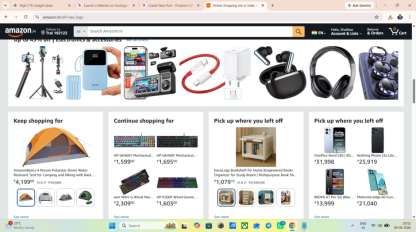 Visit Amazon official website
The Rise of Invisible Health and Wearable Intelligence
For years, the wearable technology sector was dominated by wrist-based devices that demanded constant visual attention and daily charging. The 2026 wishlist data indicates a strong consumer pivot toward devices that monitor biometrics silently, gathering comprehensive data without emitting notifications or requiring frequent interaction. The smart ring category has officially transitioned from a niche enthusiast product to a mainstream consumer necessity.
The smart ring market has grown increasingly saturated, but the RingConn Gen 2 has captured significant consumer attention by actively dismantling the industry's standard subscription model. Consumers exhibit clear fatigue over recurring monthly fees for health data, propelling the RingConn Gen 2 to the top of Amazon registries. Constructed from aerospace-grade titanium with a PVD coating, the device is impressively engineered, weighing between 2.5 and 4 grams and measuring just 2mm thick. Beyond its physical unobtrusiveness, its primary market driver is an advanced biometric suite that operates independently of paywalls.
The ring features continuous sleep apnea monitoring—a metric the company claims operates at a 90.7% accuracy rate—alongside comprehensive heart rate variability (HRV), blood oxygen saturation, and menstrual cycle forecasting. Perhaps most crucially for daily utility, the device boasts a 10 to 12-day battery life, with a portable charging case extending that autonomy up to 150 days.
However, the analysis of consumer feedback and expert testing reveals distinct trade-offs. While exceptional for passive health and sleep monitoring, rings remain suboptimal for active fitness tracking. Waving hands can occasionally trigger false step counts, and wearing titanium rings during heavy weightlifting introduces the risk of scratching the device or causing discomfort. Furthermore, competing devices like the Circular Ring 2, despite offering advanced ECG and atrial fibrillation (AFib) detection, suffer from lower wishlist retention due to reported app instability, syncing delays, and gaps in sleep data. This indicates that consumers prioritise software stability and battery life over experimental clinical features.
The Acoustic Evolution: Audio Isolation vs. Open-Air Integration
The audio accessory segment on Amazon wishlists reveals a bifurcation in consumer intent. Shoppers are simultaneously wishing for ultimate acoustic isolation and total environmental integration, depending on their specific daily environments.
Get Extra 20% OFF
Launch your website today with ultra-fast, secure & premium hosting from Hostinger. Click to claim your deal!
On the isolation front, premium over-ear active noise-cancelling (ANC) headphones remain high-priority aspiration items. Devices like the Sony WH-1000XM5 (frequently tracked for price drops from $399 to $278) and the Bose QuietComfort Ultra ($329) dominate lists. These devices are heavily desired for their ability to create artificial silence in chaotic environments—an essential utility for remote workers, frequent flyers, and individuals sharing open-plan offices. The Bose model, in particular, is noted for its motion-sensing adaptive ANC that adjusts in real-time during movement, preventing the acoustic degradation often experienced with static ANC systems when the user's jaw moves.
Conversely, a new category of open-ear audio has gained immense traction for situations where isolation is dangerous or socially unacceptable. Wearable communication has historically struggled with awkward aesthetics and invasive camera integrations. The GetD G30 Lite C1 Smart Glasses bypass these issues by focusing entirely on audio and AI translation, embedding technology into standard-looking sunglass frames.
These glasses feature open-ear Bluetooth 5.4 speakers and dual-mic beamforming, allowing users to listen to audio or take calls while remaining environmentally aware. The standout feature driving their wishlist popularity is the real-time AI translation capability, which supports over 145 languages for face-to-face conversations. Furthermore, the glasses integrate directly with ChatGPT, allowing users to query the AI via voice without looking at a smartphone screen. While users note that the translation speed and ChatGPT integration heavily rely on the companion smartphone app to process the data, the hardware serves as a highly effective, hands-free conduit for modern AI tools.
The Tactile Nostalgia Movement: Lo-Fi Photography and Analogue Audio
Alongside cutting-edge AI, the 2026 wishlist data reveals a fascinating counter-trend: the desire for purposeful technological regression. Consumers are increasingly seeking devices that limit fidelity in exchange for authentic, imperfect experiences. This indicates a widespread exhaustion with the algorithmic perfection of modern smartphones.
Marketed as a blind-box collectible, the Kodak Charmera has become a viral sensation, frequently selling out and dominating tech and gift wishlists. Modeled aesthetically after the 1987 Kodak Fling disposable camera, this device is no larger than a thumb and attaches to a keychain. From a purely technical standpoint, the specifications are objectively poor: a 1.6-megapixel 1/4-inch CMOS sensor, a minuscule LCD screen that barely functions for framing, and an optical viewfinder that is effectively just a physical hole drilled through the plastic chassis.
However, these limitations are exactly what drive consumer demand. The camera produces soft, blown-out, retro-styled JPEGs that mimic the unpredictable charm of early 2000s digital cameras or expired film. By removing the pressure of high-definition perfection inherent in modern smartphones, the Charmera gamifies memory capture. The inability to review photos clearly until they are transferred to a computer forces users to remain present in the moment. The blind-box packaging—which introduces a 1 in 48 chance of receiving a rare transparent model—further drives multiple purchases and wishlist hoarding.
This trend extends into the audio space. The Victrola Journey+ Cassette Bluetooth suitcase turntable represents a similar intersection of analogue charm and modern convenience. Frequently listed as a highly wished-for item, it combines a traditional 3-speed record player with a retro cassette deck, while uniquely allowing the analogue output to be broadcast to external Bluetooth speakers. The data suggests that consumers do not want to abandon modern conveniences like wireless audio, but they crave the physical, tactile ritual of dropping a needle or winding a cassette.
ALSO READ: Iphone 18 vs Samsung Galaxy Comparison
Professional Friction and Dedicated AI Hardware Solutions
As generative AI transitions from a novelty to a mandatory workplace utility, consumers are seeking dedicated hardware that bridges the gap between the physical world and digital processing. The reliance on browser-based AI tools creates friction; physical hardware removes it.
Get Extra 20% OFF
Launch your website today with ultra-fast, secure & premium hosting from Hostinger. Click to claim your deal!
The Plaud Note Pro represents a growing category of single-purpose AI hardware designed to eliminate administrative overhead. Measuring roughly the size of a credit card and weighing just over an ounce, the brushed aluminium device attaches magnetically to the back of an iPhone via MagSafe. Its wishlist dominance stems from its dual-mode recording capability. A physical toggle switch shifts the device between recording room audio (meetings, lectures) and recording internal phone call audio directly through the phone's chassis.
The captured audio is stored on 64GB of internal memory before being processed by the Plaud app, which utilises OpenAI's Whisper model and GPT-4 to generate highly accurate transcriptions, mind maps, and structured meeting summaries. While the hardware is universally praised for its intuitive design and 30-hour continuous recording battery, the ecosystem does rely on an annual "AI Pro" subscription for heavy users requiring more than the basic monthly transcription minutes. This introduces a recurring theme in 2026 electronics: the initial hardware purchase is often a gateway to a software-as-a-service (SaaS) ecosystem.
This hardware-based AI approach contrasts sharply with the traditional computing hardware still prevalent on wishlists. High-end laptops like the Lenovo ThinkPad E16 (featuring an Intel Ultra 7 CPU and 16GB RAM) and the Samsung Galaxy Book Pro 360 remain highly coveted for intense, local computing tasks. While AI handles the administrative summarisation on edge devices, robust local hardware remains essential for actual content creation and software development.
Designing the Ultimate Sleep Environment
Sleep hygiene has transformed into a massive consumer technology sector. Wishlist data shows a deliberate move away from using smartphones as alarm clocks, as users recognise the detrimental psychological effects of engaging with notifications immediately upon waking or just before attempting to sleep.
The Hatch Restore 3 is positioned less as a traditional alarm clock and more as a comprehensive sleep environment architect. The device features a minimalist, fabric-draped aesthetic designed to blend into modern bedroom decor, actively avoiding the harsh LED glare of legacy electronics. Its core mechanism is the sunrise alarm, which gradually illuminates the room with shifting hues of red, orange, and warm white in the minutes leading up to the wake-up time. This mimics natural dawn, triggering the biological release of cortisol rather than jolting the nervous system with loud, stressful audio.
Conversely, the device features a nightly "Unwind" cue—a customisable routine of ambient light and soundscapes that physically signals the brain to prepare for sleep. The device's popularity on Amazon wishlists is slightly complicated by its business model. While basic sunrise and white noise functions are included, the vast library of guided meditations, sleep stories, and specialised audio requires a Hatch+ subscription. Despite this, the physical controls—including a tactile knob and distinct buttons—allow users to leave their smartphones in another room entirely, providing immense value for those seeking a genuine digital detox at the end of the day.
Nomadic Power Dynamics: High-Efficiency Charging and Micro-Climates
Consumer mobility in 2026 demands gear that operates at maximum efficiency. With users carrying an interconnected ecosystem of devices—smartphones, wireless earbuds, smartwatches—power management and personal physical comfort have become highly technical pursuits.
The transition to the Qi2 wireless charging standard has dramatically improved third-party charging speeds, but heat generation remains a critical bottleneck. The ESR CryoBoost 3-in-1 Foldable Charger addresses this through active thermal management, earning recognition from TIME's Best Inventions. This travel-focused hub folds down into a pocketable square. When deployed, it simultaneously charges a smartphone at up to 25W, alongside an Apple Watch and wireless earbuds.
The defining feature is the CryoBoost fan embedded behind the MagSafe mount, which actively cools the phone during charging. By preventing thermal throttling, the charger maintains peak wattage for longer durations, resulting in significantly faster 0-80% charge times compared to passive competitors. For more rugged travel, the Anker Nano 5,000mAh portable USB-C charger remains highly wishlisted for its pocket-friendly size and ability to deliver 22.5W directly into a device without cumbersome cables.
Get Extra 20% OFF
Launch your website today with ultra-fast, secure & premium hosting from Hostinger. Click to claim your deal!
Simultaneously, personal climate control has emerged as a vital travel and commuting category. As global temperatures fluctuate and micro-climates in offices or public transit become increasingly unpredictable, the JISULIFE Portable Neck Fan reimagines the traditional handheld fan as a wearable utility. Shaped remarkably like a pair of premium over-ear headphones resting on the collarbone, the device utilises a bladeless turbine system to push air upward across the face and neck. Equipped with a massive 4000mAh battery, the fan can operate continuously for up to 16 hours on its lowest setting, providing hands-free relief while remaining relatively quiet at 25 decibels.
Gamified Nature and the Smart Home Periphery
The integration of smart technology into the natural environment represents a rapidly expanding segment of the Amazon wishlist ecosystem. The smart home boundary has moved beyond the front door to encompass the garden and surrounding ecosystem.
Traditional bird watching requires immense patience and specialised optics. The Netvue Birdfy Smart Bird Feeder automates and gamifies the process, making it highly coveted by homeowners, parents, and nature enthusiasts. The system comprises an IP65 weatherproof bird feeder housing a 1080p wireless camera and a high-capacity seed bin. When a bird lands to feed, motion sensors trigger the camera to record video and capture stills. The defining feature, however, is the onboard AI recognition software, which can identify over 6,000 distinct bird species, sending real-time push notifications to the user's smartphone detailing exactly what type of bird is currently visiting.
Coupled with a dedicated solar panel that eliminates the need to remove the camera for manual recharging, the Netvue Birdfy creates a seamless, educational window into backyard ecosystems. This aligns with broader home security wishlist trends, where robust, weather-resistant cameras like the Ring Outdoor Cam and Blink HD systems are highly desired for extending digital awareness to the property line. The appeal lies in local processing and solar sustainability, reducing the burden of battery swaps and constant maintenance.
ALSO READ: HOW TO MAKE WEBSITE ON HOSTINGER UNDER 30 MIN.
Wishlist Economics: How Aspiration Drives the Marketplace
Understanding the Amazon wishlist requires looking beyond the gadgets themselves to the economic mechanics of the platform. The wishlist functions as a powerful demand signal tool for the broader retail ecosystem.
When an item like the Kodak Charmera frequently sells out, users leave it on their wishlist to monitor restocks, creating a measurable metric of pent-up demand. E-commerce strategists and Amazon marketplace sellers utilise this aggregated wishlist data to predict upcoming seasonal trends, gauge the popularity of specific niches, and optimise their inventory planning and manufacturing pipelines. High wishlist velocity is widely considered one of the strongest indicators of future sales volume. Furthermore, Amazon's algorithm frequently alerts users via push notifications if a wishlisted item drops in price, making the list a strategic tool for securing highly sought-after hardware at a discount during major sales events like Prime Day.
However, the influx of advanced hardware has prompted vital questions regarding consumer privacy. Amazon wishlists default to the privacy setting chosen by the creator (Private, Shared, or Public). When sharing lists for weddings, birthdays, or public registries, consumers must be aware of backend policy shifts. Recent changes dictate that buyers can purchase items from third-party sellers on a list, which subsequently results in the recipient's shipping address being shared with that specific third-party merchant to facilitate fulfilment. While this broadens the availability of products, it introduces a layer of data dispersion that privacy-conscious consumers must navigate.
The Future of the Consumer Ecosystem
The hardware dominating Amazon's most wishlisted metrics for 2026 illustrates a mature, highly discerning consumer base. The era of purchasing a device simply for the sake of its raw processing power or to act as a flashy status symbol has largely ended. Instead, the modern technological ecosystem is characterised by tools that respect the user's time, protect their mental bandwidth, and seamlessly solve hyper-specific environmental or administrative frictions.
The data reveals a fascinating dichotomy: consumers want their complex technology to disappear into the background (invisible health rings, ambient smart home tech), while simultaneously yearning for tactile, imperfect objects that ground them in reality (retro cameras, vinyl turntables). The highest form of technological luxury in 2026 is not a brighter screen or a louder notification; it is the ability to maintain absolute connectivity while remaining entirely present in the physical world.
Whether it is a titanium ring silently mapping cardiovascular health, a magnetic AI recorder autonomously transcribing a boardroom negotiation, or a low-resolution keychain camera reviving the unpredictable joy of analogue photography, the message from the marketplace is definitive. The most successful technology of the coming decade will be the technology that requires the least amount of active management, serving the user rather than demanding to be served.







💬 Comments (0)
🔒 Please login to post a comment.
Login Now